Volvo D13 Low Oil Pressure Warning: What to Check First
If you’re getting a low oil pressure warning on a Volvo D13, don’t jump straight to parts. There’s a clear order to work through this, and most of the time the answer shows up in the first couple of steps. Here’s how I actually go through it.
1. When Was the Oil Last Changed?
First question I ask every time: when was the oil changed last? Running oil too long is one of the simplest ways to end up with low pressure at the block, so this is always step one before touching anything else.
2. Check the Oil Level the Right Way
If the oil was changed recently, the next thing is to actually verify the level, but do it properly. Park the truck and let it sit for about 60 minutes before pulling the dipstick. Checking right after a drive will give you a false reading. Top it up if it’s low. Most of these trucks run on 10W-30 synthetic, which is the standard for heavy diesels, so make sure whatever’s in there matches the spec for your model.
3. Inspect the Oil Pressure Sensor and Wiring
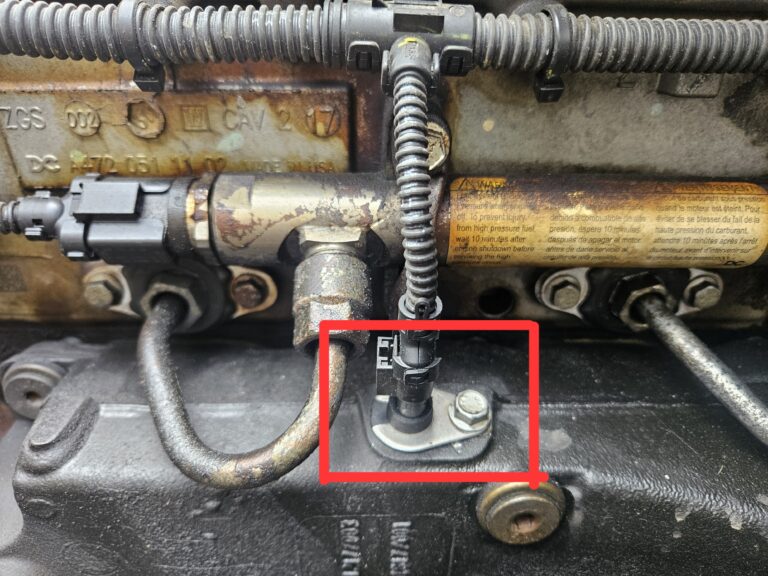
If the level checks out fine, the next stop is the oil pressure sensor and its wiring and connector. Look for any damage on the harness or a loose connector. One thing worth knowing: there are two sensors close together in this area, and people mix them up all the time. I’ll put a photo below showing exactly which one is the actual oil pressure sensor so you’re not guessing.
If the connector is seated properly and the harness looks fine, the next move is just to swap the sensor. In my experience this is the most likely point of failure giving you a false reading. It’s a cheap part and an easy job, even with shop labor it’ll cost you less than most other fixes on this list, so it’s worth trying before anything more involved.
4. If the Sensor Swap Doesn’t Fix It
If you’ve changed the oil, confirmed the level, replaced the sensor, and you’re still seeing low oil pressure, especially if you’re seeing something like 33–34 psi along with the engine stalling, that points toward something more serious: oil pump wear, clogged oil passages, or a failed oil pressure relief valve.
Here’s why that range matters. At 33–34 psi, the engine is actually still within normal spec. This engine doesn’t shut down until pressure drops down to roughly 12–15 psi. So if a fault code is triggering and the engine is stalling, the actual pressure at the moment of the fault has to be dropping into that lower range, even if your gauge or scan reading shows something closer to 33–34 psi at other times. That’s the detail that tells me this isn’t the sensor anymore, it’s a real pressure problem.
At that point I’d inspect the oil pump directly. There’s a pressure reduction valve built into the pump itself that can fail and cause exactly this kind of drop. It’s located close to the starter motor, next to the piston cooling relay valve, I’ll add a photo of that location too.
Another possible cause, less common, is the rocker shaft oil feed tube. If the seal rings on that tube fail, it can affect oil pressure, but this usually only shows up after the engine has had overhead work done, like a valve job or head repair. Worth asking if the truck has had that kind of service before chasing this one.
What to Check, in Order
- Oil change history
- Oil level (after letting it sit 60 minutes)
- Oil pressure sensor wiring and connector
- Oil pressure sensor itself (swap if wiring is fine)
- Oil pump and pressure reduction valve
- Rocker shaft oil feed tube seals (if the engine has had overhead repair)
Can You Keep Driving?
If you haven’t gotten past the sensor check yet, treat it seriously, you don’t actually know if it’s a false reading or real pressure loss until you’ve ruled the sensor out. A bad sensor on its own won’t derate the engine, but it can shut the truck down, and if it fails to shut down in time and the engine is actually running low on oil, you’re looking at a blown engine. Once you’re past steps 1 through 4 and still seeing the warning with pressure in that 33–34 psi range and stalling, get it looked at before continuing. By the time the fault code is firing, actual pressure is dropping low enough that running it risks real engine damage.
Frequently Asked Questions
Can a bad oil pressure sensor cause the engine to derate or shut down?
It won’t cause a derate, but it can shut the truck down. The real risk is if the sensor fails and doesn’t trigger the shutdown in time while the engine actually has no oil left, in that case you’re looking at a blown engine.
Is there a specific fault code for this issue?
It varies depending on what’s actually wrong. You might see a code for an open circuit on the oil pressure sensor, or a separate code for oil pressure too low, so check what the scan tool is actually reporting rather than assuming it’s always the same fault.
How much does it cost to fix?
For most Volvos, the oil pressure sensor itself usually runs around $120 in parts plus about an hour of labor, with labor rates depending on the shop. Common OEM part numbers for the D12/D13 sensor include 21634021, 22899626, and 20634019, but always confirm with your VIN through the dealership before ordering, since parts can vary by build.
Could a bad turbo be causing this instead?
No, a failing or leaking turbo is a separate issue entirely. If the turbo is the problem, you’ll typically notice a loss of engine power rather than a low oil pressure warning.
How do I tell this apart from an oil cooler issue or a blown head gasket?
If the oil cooler is leaking, you’ll usually start seeing oil in the coolant tank. If the head gasket has blown, you’ll typically notice the oil level rising unexpectedly while the coolant level drops. Neither of those looks the same as a straightforward low oil pressure warning, so checking your coolant tank and oil level trend can help rule those in or out.
Related Volvo D13 Problems
● Losing Air Pressure When Applying Brakes — Here’s What to Check
● Missing Communication From The Climate Control ECU — Volvo D13
● Volvo D13 Headlights Are Not Working — What To Check
Disclaimer
Diagnosing and repairing oil pressure issues should be done by a qualified mechanic. If you’re a driver doing a basic check, do it on level ground with the engine off and cool, and don’t continue driving if you’re hearing unusual engine noise alongside the warning.