Losing Air Pressure When Applying Brakes — Here’s What to Check
If you’re losing air pressure when applying brakes on your truck, don’t ignore it. This isn’t a small issue it’s a safety problem. Air loss while braking means something in your brake system is leaking, and you need to find it before it gets worse or leaves you with no brakes at all. I’ve seen this plenty of times in the shop. Let me walk you through the most common causes and how to track it down yourself.
Common Causes of Air Loss When Braking
1. Brake Chamber Leak
The brake chambers are what physically push the brakes when you press the pedal. Each axle has them, and they can develop leaks around the diaphragm inside or at the fittings. When a chamber leaks, you’ll typically hear a hissing sound near the wheels usually at the rear axles. A leaking chamber means air is escaping every time you apply the brakes, so your system pressure drops faster than it should. If it’s bad enough, your low-air warning will kick in after just a few brake applications.
2. Relay Valve Leak (Brake Valve)
The relay valve speeds up air delivery to the rear brakes. Without it, there would be a noticeable delay between pressing the pedal and the brakes actually engaging on the rear axles. When a relay valve starts leaking internally or at its exhaust port, you’ll lose air pressure each time you apply the brakes. You can sometimes hear it hissing from underneath the truck near the rear axles. The exhaust port on the relay valve is designed to release air when you let off the brakes but if it’s leaking while the brakes are applied, something is worn or cracked inside.
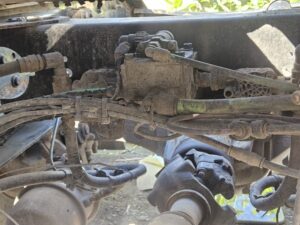
3. Quick Release Valve Leak
The quick release valve allows air to exhaust quickly from the brake chambers when you release the pedal this is what makes the brakes release fast instead of dragging. If you’re hearing air leaking when the yellow trailer brake button is pushed in (meaning trailer brakes are released and only the truck is being used), there’s a good chance the quick release valve is leaking. It usually sits close to the brake chambers, and when the diaphragm inside cracks or wears out, air bleeds through even when it shouldn’t. Worth checking this one early they’re relatively inexpensive and easy to swap out.
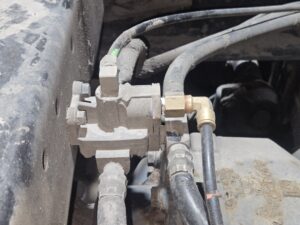
Quick Release Valve Is Located Rear 1st Axle In The Middle.
4. Foot Valve (Treadle Valve) Leaking
The foot valve, also called the treadle valve, is the component directly connected to your brake pedal. When you press the pedal, the foot valve sends air to the brake system. When it develops an internal leak usually from worn seals or a damaged diaphragm air will bleed through even when you’re not fully pressing the pedal, or you’ll notice constant air loss while the pedal is held down. You can often hear this one leaking from inside the cab near the pedal, or if you get under the dash area. I’ll add a picture and location of the foot valve below so you know exactly what you’re looking at.
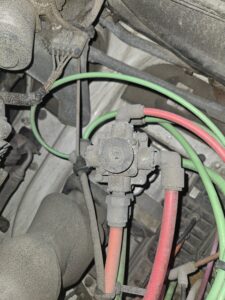
Foot Valve (Treadle Valve) Is Located Under The Hood Close The The Steering Rod.
5. Air Suspension Valve Leak
Air suspension systems share the same air supply as your brakes on most trucks. The suspension leveling valves control airflow to the air bags to keep the truck level under load. When one of these valves starts leaking — whether from a cracked body, worn seal, or loose fitting — it pulls air from the system continuously. You might notice the truck sitting low on one side, or hear a slow hiss around the frame near the rear axles. Because the brake and suspension systems share air, a bad suspension valve can make it look like a brake problem when you check your gauges.
6. Air Bag Leak or Blown Air Bag
The air bags — also called air springs — support the weight of the truck and trailer. They take a beating, especially when running heavy loads or rough roads. Over time the rubber can crack, or a fitting can loosen and cause an air leak. In a bad case, an air bag can fully blow out, which causes a sudden, dramatic loss of air pressure and usually drops that corner of the truck to the frame. Even a small crack in an air bag will cause a slow air bleed that gets worse every time the system works harder under load.
How to Diagnose Air Loss When Braking — Step by Step
Finding an air leak is about isolating the system step by step. Don’t just start crawling under the truck without a plan. Here’s how I approach it:
Step 1 — Isolate the trailer first (if you’re pulling one)
Pull the red trailer brake button out to cut air to the trailer, then push the yellow button in to release the trailer parking brakes. Now apply your foot brake slowly and listen. If the air leak stops or gets significantly better, the problem is in the trailer brake system — not the truck. This one step alone can save you a lot of time under the wrong vehicle.
Step 2 — Check for leaks under the hood while pressing the foot brake
Have someone hold the foot brake down while you listen under the hood. If you hear a hissing or rushing air sound coming from around the pedal or firewall area, you’re most likely looking at the foot valve. The foot valve is mounted close to the pedal mechanism, usually on the firewall or just behind it. A leaking foot valve will often get louder the harder you press the pedal. I’ll add photos of the exact location below to make this easier to spot.
Step 3 — Inspect the suspension air bags
Walk around the truck and look at the air bags on each axle. Heavy loads over time cause the rubber to fatigue, and it’s not always obvious — a small split or pinhole can leak air slowly. Put your hand near each bag and feel for airflow, or use soapy water and look for bubbles. Also look at the fittings where the air lines connect to the bags. These can loosen over time, especially if the truck has been vibrating or the lines have been moved during other repairs.
Step 4 — Check the rear axle area with brakes released
Push the yellow button in (park brakes released on truck) and walk to the middle rear axle area. Listen for any air leaking near the relay valve or brake chambers. Sometimes you can hear it clearly just standing next to the truck. If the leak is only happening when brakes are applied and not at rest, the relay valve or brake chambers are your prime suspects. If air is constantly leaking even with everything released, that points more toward a suspension valve or air bag.
Step 5 — Check the air dryer if you hear leaking mid-truck on the driver’s side
If the air leak sounds like it’s coming from underneath the truck on the driver’s side in the middle, it could be the air dryer. The air dryer cleans and dries the compressed air before it enters the system. It has a purge valve that releases moisture regularly — but if that valve sticks open or the dryer itself is failing, it can dump air constantly. To check this properly you need to get under the truck. Only do this on a flat, solid surface with the truck chocked and safely supported. This is one where you really need to be careful — don’t skip the safety steps.
Air loss when braking isn’t something that gets better on its own. A slow leak turns into a bigger leak, and a bigger leak can leave you pressing a pedal that does less and less. Find it early, fix it right, and don’t run the truck if your air pressure is dropping faster than it should.
Disclaimer
Any brake system repair or inspection involving the air system should only be performed by a qualified, licensed mechanic. Air brake systems operate under high pressure and improper handling can result in serious injury or death. If you are a driver performing a visual inspection, always do so in a safe, flat area away from traffic. Wear safety boots and safety glasses at minimum. Never work under a vehicle that is not properly chocked and supported. If you suspect a brake system fault, do not operate the vehicle — have it inspected by a professional before driving.