DTC P205B64
Reductant Tank Temperature Sensor Fault
Model: Volvo
Check Engine Light: On
Can Drive: Yes, with caution
Severity: Moderate
Likely Cause: Frozen, low, or contaminated DEF
What Triggers This Fault Code
Diesel trucks equipped with Selective Catalytic Reduction (SCR) systems rely on Diesel Exhaust Fluid (DEF), also known as AdBlue, to reduce harmful emissions. DTC P205B64 points to a plausibility failure in the reductant tank’s temperature sensor circuit. In simple terms, the vehicle’s computer has detected that the temperature reading coming from the DEF tank doesn’t match what it expects under normal operating conditions — usually because the reading is lower than it should be.
When this code sets, the most noticeable sign is a Check Engine Light. There typically aren’t other drivability symptoms, which means many drivers won’t notice anything unusual until a technician runs a diagnostic scan.
Common Causes Behind the Code
Several issues can trigger this fault, and most of them relate directly to the condition of the DEF fluid or the tank hardware itself:
- Frozen DEF fluid — DEF freezes at temperatures between roughly -11°C (12°F) and 0°C (32°F), which can throw off sensor readings.
- Low DEF level — Insufficient fluid in the tank can affect sensor accuracy.
- Contaminated or diluted DEF — Water, coolant, diesel, or windshield washer fluid mixed into the tank changes the fluid’s properties.
- Damaged tank connector — Corrosion or physical damage to the wiring connector can disrupt the signal.
- Internal sensor or tank unit failure — The combined tank unit itself may have failed internally.
Step 1: Check for Frozen Fluid
The first diagnostic step is a straightforward visual inspection. Technicians remove the tank’s filler insert to get a clear view and better access to the fluid inside. A heat gun is held near the tank opening to help identify frozen fluid. If the DEF has frozen — often because water has mixed into it — the dashboard gauge will typically show a low or empty reading, even if the tank is actually full. If freezing is confirmed, the correct fix is to run the SCR system’s forced heating function to thaw the fluid before continuing any further tests.
✅️ Volvo VNL Highway Horn Not Working? Here’s How to Fix It
Step 2: Test DEF Concentration
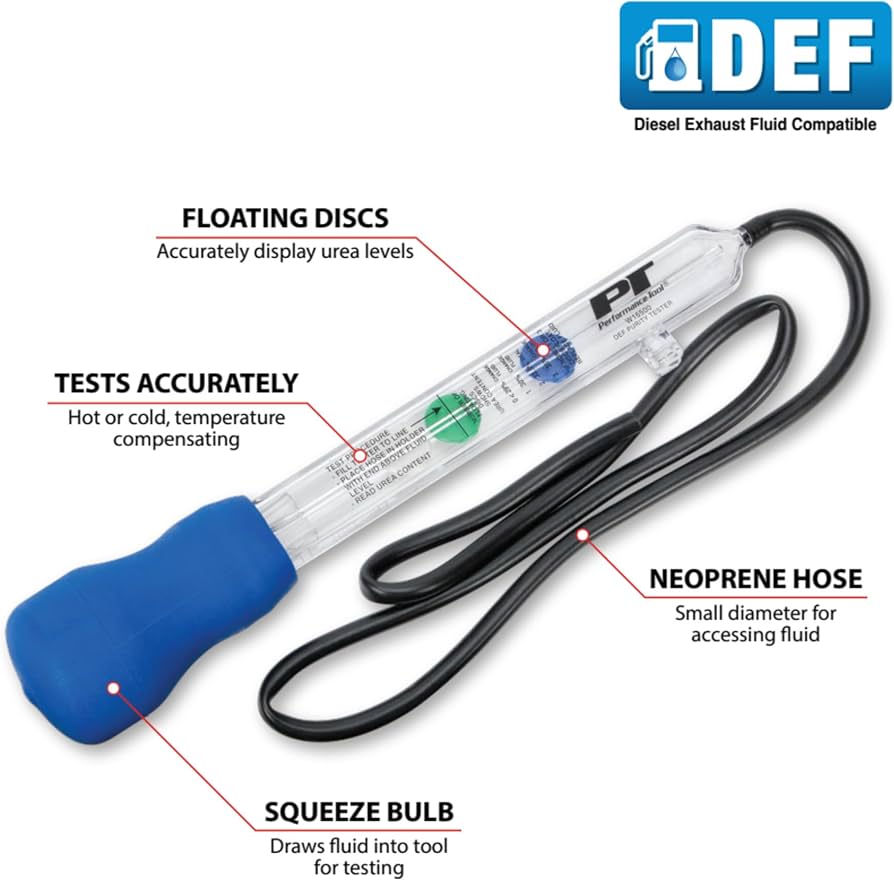
Because SCR systems are highly sensitive to fluid purity, checking the DEF’s concentration is a critical step. Note: DEF should not be topped off at this stage, since adding fluid could dilute the sample and skew results.
The general process looks like this:
- Clean all test equipment with distilled water beforehand.
- Remove the filler cap and neck insert for better access.
- Draw a small sample of fluid from the surface using a clean hose (extend the hose if the tank level is low).
- Place a drop of the sample on a refractometer or concentration-testing instrument.
Reading the results:
- A reading outside the normal DEF/AdBlue range signals incorrect concentration.
- No reading at all may point to contamination with pure water or diesel fuel.
- Red, green, or orange coloring often suggests engine coolant contamination.
- Blue coloring may indicate windshield washer fluid has entered the tank.
Step 3: Inspect the Electrical Connector
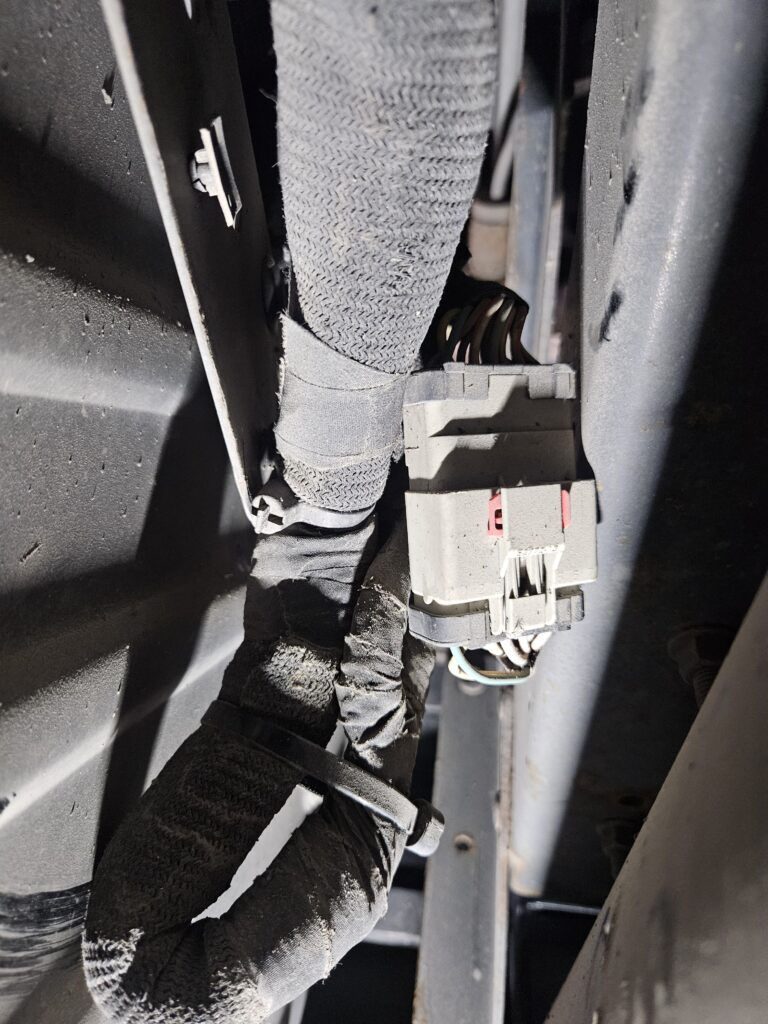
If the fluid itself checks out, attention shifts to the wiring. With the vehicle powered completely off, technicians disconnect the tank’s connector and examine it closely. Key things to check:
- Pins and terminals for oxidation or corrosion.
- Confirmation that terminals are properly seated and not pushed back out of place.
- Any physical damage to pins that could cause a poor connection.
All connectors must be reconnected securely once the inspection is complete.
Step 4: Confirm With a Function Test
After completing fluid and connector checks, a function test verifies whether the repair resolved the issue:
- Clear the existing DTC.
- Run the engine at 1,000 RPM for at least two minutes.
- Shut the engine off and turn the ignition to OFF.
- Wait 15 seconds.
- Restart and run the engine again at 1,000 RPM for two-plus minutes.
- Recheck the DTC status.
If the code returns as active, the combined tank unit itself likely needs replacement.
A Note on Repair Verification
Some SCR-related codes are difficult to verify with full confidence during a single test drive, since the control module’s monitoring conditions can be complex. In these cases, the recommended approach is to complete all applicable fault-tracing steps, verify whatever can reasonably be confirmed, and clear the codes before returning the vehicle to service.
Mehanic Notes
P205B64 is ultimately a signal-plausibility issue tied to the reductant tank’s temperature sensor, but the root cause is almost always fluid-related frozen, low, or contaminated DEF or a connector problem rather than a major mechanical failure. A systematic check of fluid condition, concentration, and wiring integrity resolves the issue in most cases without needing a full component replacement.