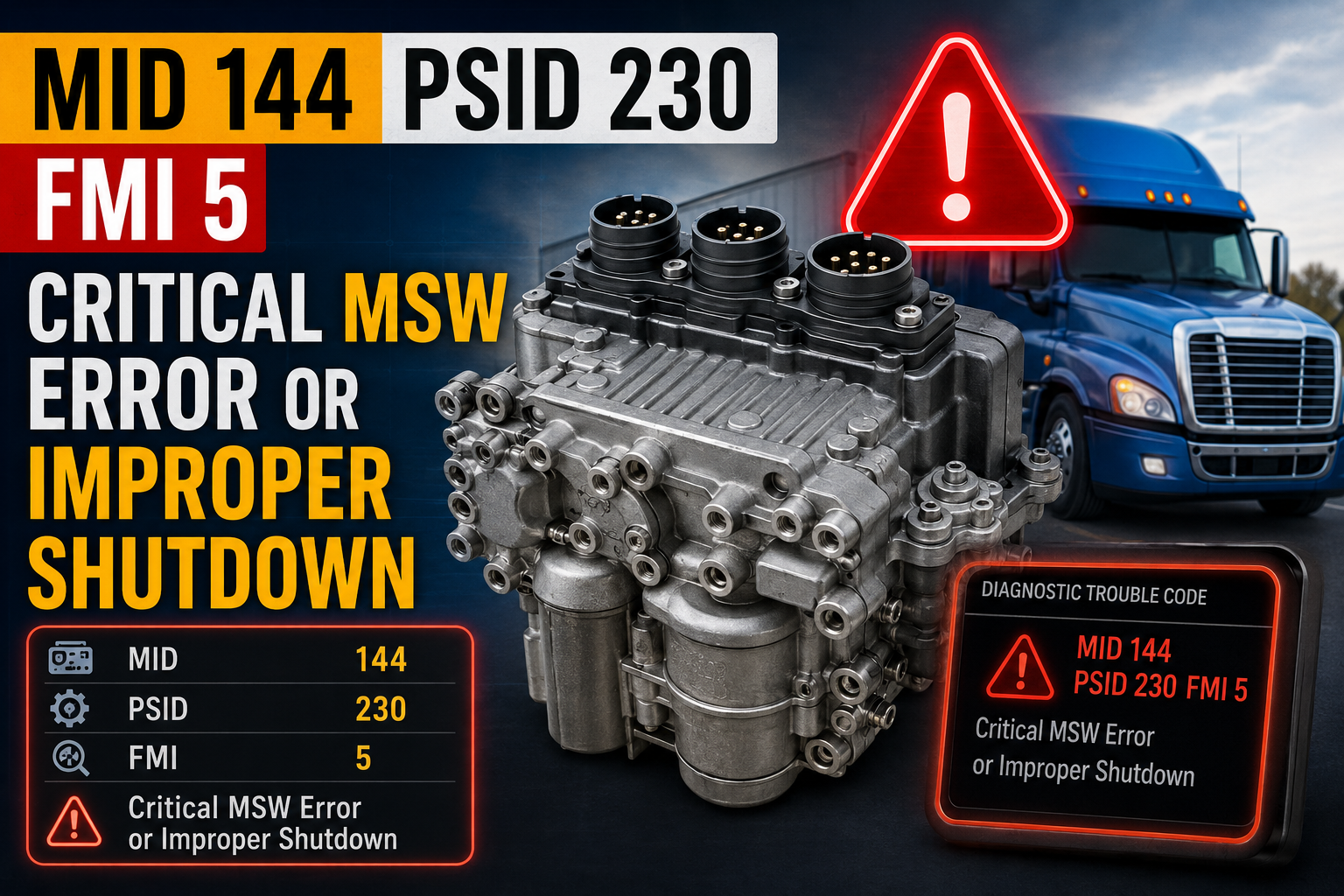
Critical Fault · MID 144 PSID 230 FMI 5
Critical MSW Error or Improper Shutdown
🚚 Model: Volvo
💡 Check Engine Light: Varies
🚗 Can Drive: Caution advised
⚠️ Severity: High
🔧 Likely Cause: Blown fuse or VECU failure
What Triggers This Fault Code
This fault code centers on the Vehicle Electronic Control Unit (VECU), one of the central control modules responsible for coordinating vehicle functions. It sets when the system detects an improper shutdown, an intermittent loss of power, or an issue with the VECU’s power supply itself. In more technical terms, the control unit is reloading or restarting in an uncontrolled way, rather than shutting down and starting up cleanly as designed.
Because this points to a power-related issue at the control unit level, it’s considered a more serious fault than many sensor-based codes, since it affects the stability of a core electronic module rather than a single component.
Observable Symptoms
There are typically no distinct driving symptoms tied directly to this code. It’s usually identified only through a diagnostic scan, which makes it easy to miss without regular system checks — even though the underlying issue involves unstable power delivery to a critical control module.
🟢Check Related Code MID 144 PID 1592 FMI 12 : Cruise Control Panel Switch
Common Causes Behind the Code
The root causes for this fault generally fall into three categories:
- Blown fuse — interrupts power delivery to the VECU.
- Damaged VECU connector — a loose, corroded, or damaged connector disrupting steady power flow.
- Internal VECU failure — the control unit itself has an internal fault causing it to restart unexpectedly.
Step 1: Cycle the Ignition
The first recommended action is a simple power cycle to observe how the system behaves:
- Turn the ignition key to the OFF position.
- Wait at least 10 seconds before turning the ignition key back on.
- Allow the system to read out the current DTC status.
This step helps establish whether the issue is consistent or intermittent, which shapes the rest of the diagnostic approach.
Step 2: Test for Intermittent Faults
Since power supply issues are often intermittent rather than constant, a wiggle test using a multimeter is typically the most effective way to catch a bad connection in action. A test drive may also be necessary to recreate the exact conditions under which the fault originally occurred.
How the test is performed:
- Set the multimeter to the appropriate measurement setting.
- This test requires two people — one to drive and one to perform the wiggle test on command.
- Connect the measurement tools according to the wiring schematic.
- Measure between the designated measurement points on the relevant connector.
- Once a baseline reading is captured, activate the MIN/MAX function on the multimeter.
- While driving or wiggling the wiring harness, watch for minimum and maximum voltage spikes or drops that indicate a poor connection.
Step 3: Inspect the VECU Connector
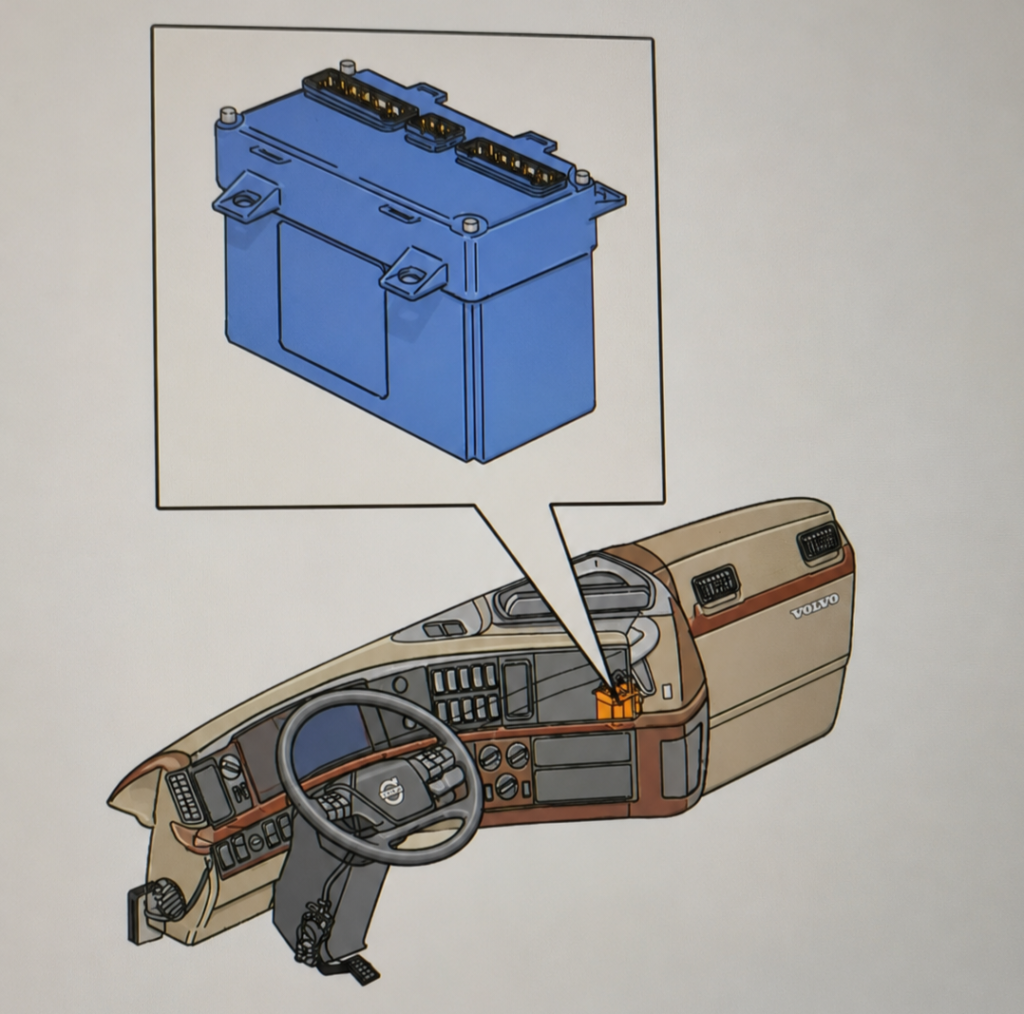
With the vehicle fully powered off, disconnect and inspect the VECU’s connector carefully:
- Confirm the connector is properly seated and locked into position.
- Check pins and terminals for oxidation or corrosion.
- Make sure terminals are locked in place and haven’t been pushed back out of their sockets.
- Look for any physical damage to pins that could cause a poor or intermittent connection.
Once the inspection is complete, reconnect all connectors securely before moving forward.
Why Repair Verification Matters
After any diagnostic action, it’s important to run a repair verification to confirm whether the fault status has genuinely changed. In some cases, simply reseating a connector during the inspection process resolves the issue, even if no obvious defect was visible. If that happens, it’s a useful clue that a loose connection was likely the root cause, and it’s worth keeping an eye on that area going forward.
Mechanics Notes
MID 144 PSID 230 FMI 5 points to instability in the VECU’s power supply, most often caused by a blown fuse, a damaged connector, or an internal control unit failure. Because this fault involves a core control module restarting unpredictably, a careful wiggle test combined with a thorough connector inspection is the most reliable way to catch the intermittent fault and confirm a lasting fix.