Battery Is Not Charging — Showing Low Voltage
If your truck battery is not charging and your dashboard is showing low voltage, don’t ignore it because it will leave you stranded sooner or later. Most of the time it comes down to just a few things, and you can check most of them yourself before spending money on parts you might not even need. I’ve run into this problem more times than I can count over the years, so let me walk you through exactly how I check it, step by step, the same way I’d do it in the shop.
Basic Checks To Start With
Before anything else, the first thing you have to do is make sure your alternator is actually producing power. You want to see 13.5 volts or higher coming out of it. If it’s not making enough power, nothing else you check is going to matter, so this is always where I start.
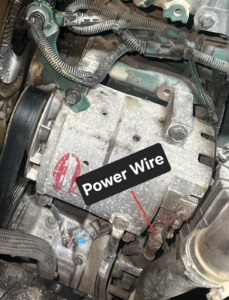
To test it properly, start by disconnecting your battery power first. Then remove the positive wire from the alternator as shown in the picture below. This is important, make sure you tape up that positive wire so it doesn’t touch anything. A loose positive wire can spark, and those sparks can lead to bigger and more serious injuries, so don’t skip taping it. Take your time here and be safe about it.
Once that’s done, connect your battery terminals back on and make sure they’re fully tight. Loose terminals can fool you into thinking you’ve got a charging problem when you really just have a loose connection. Now start your truck and use your tester to check the voltage coming straight out of the alternator. If you’re reading 13.5 volts or above, your alternator is doing its job and it’s fine. If it’s reading lower than that, your alternator most likely needs to be replaced.
Alternator Is Good? Here’s What’s Next
If your alternator checked out fine, do the same thing as before. Disconnect the battery terminals again and put back the positive wire that you removed from the alternator. Now it’s time to look closer at the batteries themselves.
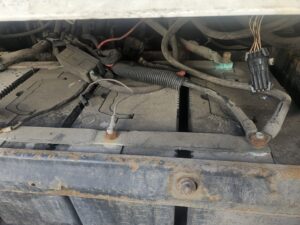
Check each one of your batteries for any leakage on them. A leaking battery is a bad battery and it’ll pull your whole system down. While you’re at it, check the battery terminals for corrosion. That white or greenish buildup on the terminals might not look like much, but it can choke the power supply coming from the alternator and cause low voltage even when everything else is working fine.
Battery Not Charging But Voltage And Terminals Look Fine? Check The Signal Wires
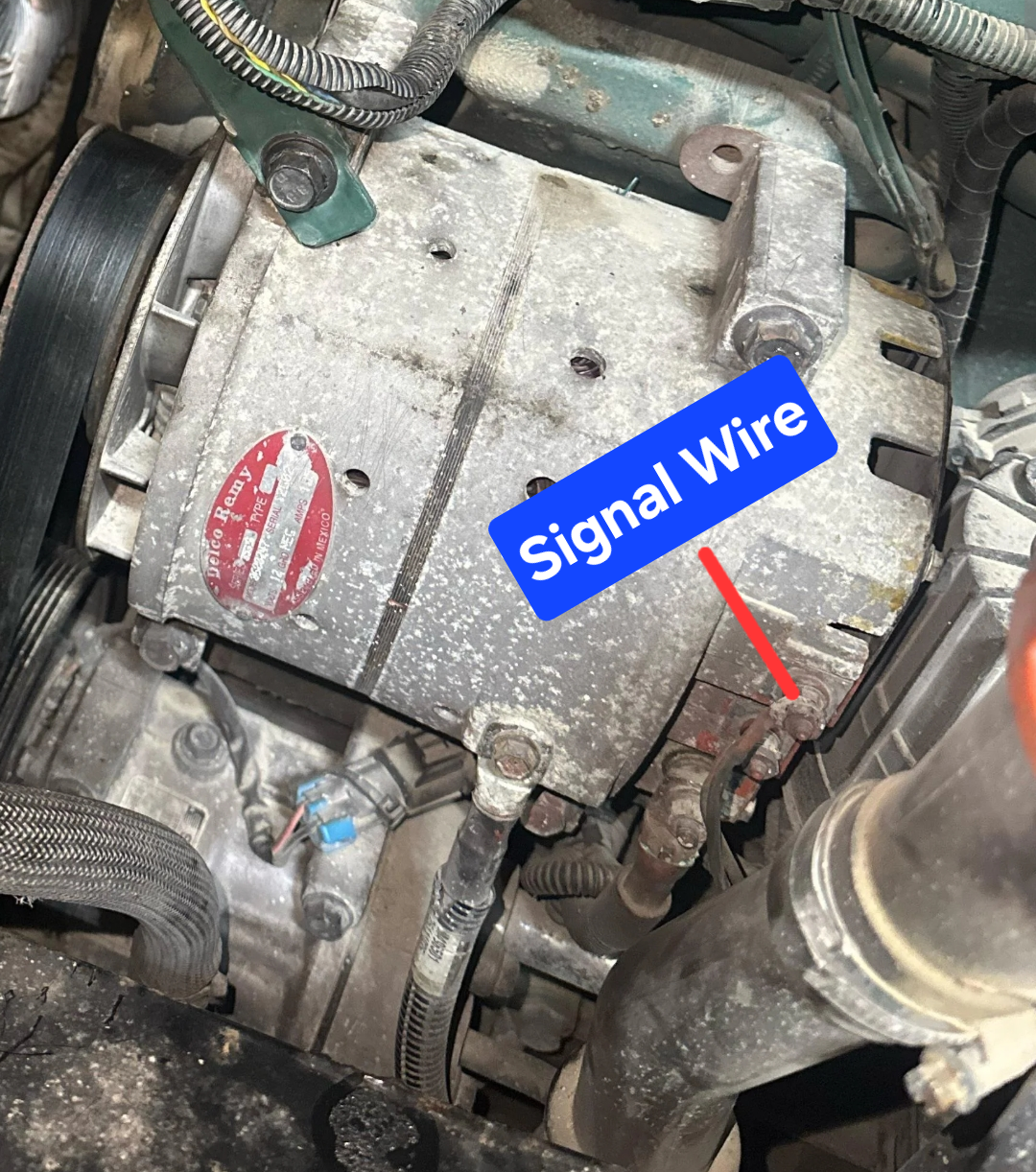
Here’s one a lot of people miss. If your alternator is charging the battery to around 13.7 volts and your terminals only have very minor corrosion, then most likely your problem is with the signal wires. There are two small signal wires on the alternator, and these are the ones that tell your dashboard your battery’s voltage, or warn you when it’s low. As shown in the picture, you can see these two small wires attached to the alternator.
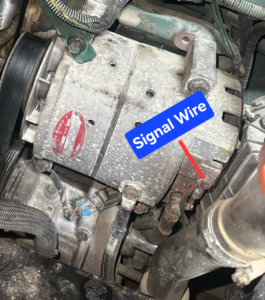
Make sure both of those wires are properly secured and not loose. Then inspect them closely for any open circuit, meaning a break or damage somewhere along the wire. If one of these signal wires is loose or broken, your dash can show low voltage even when your charging system is actually working fine. So don’t go replacing your alternator over a bad little signal wire.
🟢 Volvo VNL Highway Horn Not Working? Here’s How to Fix It
Not Getting 13.5 Volts? Check The Positive Wire
If your power is not coming through at 13.5 volts or more, then take a good look at the positive wire coming from the alternator. Over time these wires can get damaged, corroded inside, or worn out, and that stops the power from getting where it needs to go. Inspect it closely, and if it looks bad, replace it.
My Experience With This Problem
I’ve run into this issue so many times over the years, and honestly most of the time it ends up being one of two things. Either the alternator itself needs to be changed, or it’s the power wire coming from the alternator. Those two are the usual culprits, so if you work through these checks in order, you’ll usually land on your answer.
If you’ve gone through all of this and it still didn’t solve your problem, head over to our Community Forum and check there. Someone might have run into the exact same thing and can help point you in the right direction. Thanks for reading, and stay safe out there.
Frequently Asked Questions
Why is my battery not charging and showing low voltage?
Most of the time it’s a weak alternator that isn’t putting out 13.5 volts or more, or a damaged positive wire coming from the alternator. It can also be corroded terminals, a leaking battery, or a loose signal wire feeding your dashboard. Work through each one in order to find it.
What voltage should my alternator be putting out?
You want to see 13.5 volts or higher coming out of the alternator while the truck is running. If it’s reading below that, the alternator most likely needs to be replaced.
Can a bad wire cause low voltage even if my alternator is good?
Yes. A damaged positive wire from the alternator, or one of the two small signal wires being loose or broken, can show low voltage on your dash even when the alternator is charging fine. Always check the wires before assuming the alternator is bad.
How do I safely test my alternator output?
Disconnect the battery power first, remove and tape off the positive wire from the alternator to avoid sparks, then reconnect the battery terminals tight. Start the truck and use a tester on the alternator to read the voltage. Always tape that positive wire, loose sparks can cause serious injury.
🟢 Volvo D13 Headlights Are Not Working — What To Check
Disclaimer
Electrical and charging system repairs should only be performed by a qualified, licensed mechanic. Working around batteries and live positive wires can cause sparks, burns, or serious injury if not handled correctly. Always disconnect battery power and tape off exposed wires before working. If you are doing a basic inspection, do it in a safe, flat area away from traffic and wear safety boots and safety glasses. If you’re unsure at any point, stop and have the truck checked by a professional.