|
TRANSMISSION FAULT TECU P105922Gearbox Oil Temperature Sensor Signal Amplified |
Model: Volvo | Check Engine Light: On | Can Drive: Caution advised
Severity: High | Likely Cause: Transmission oil over 100°C
What Triggers This Fault Code
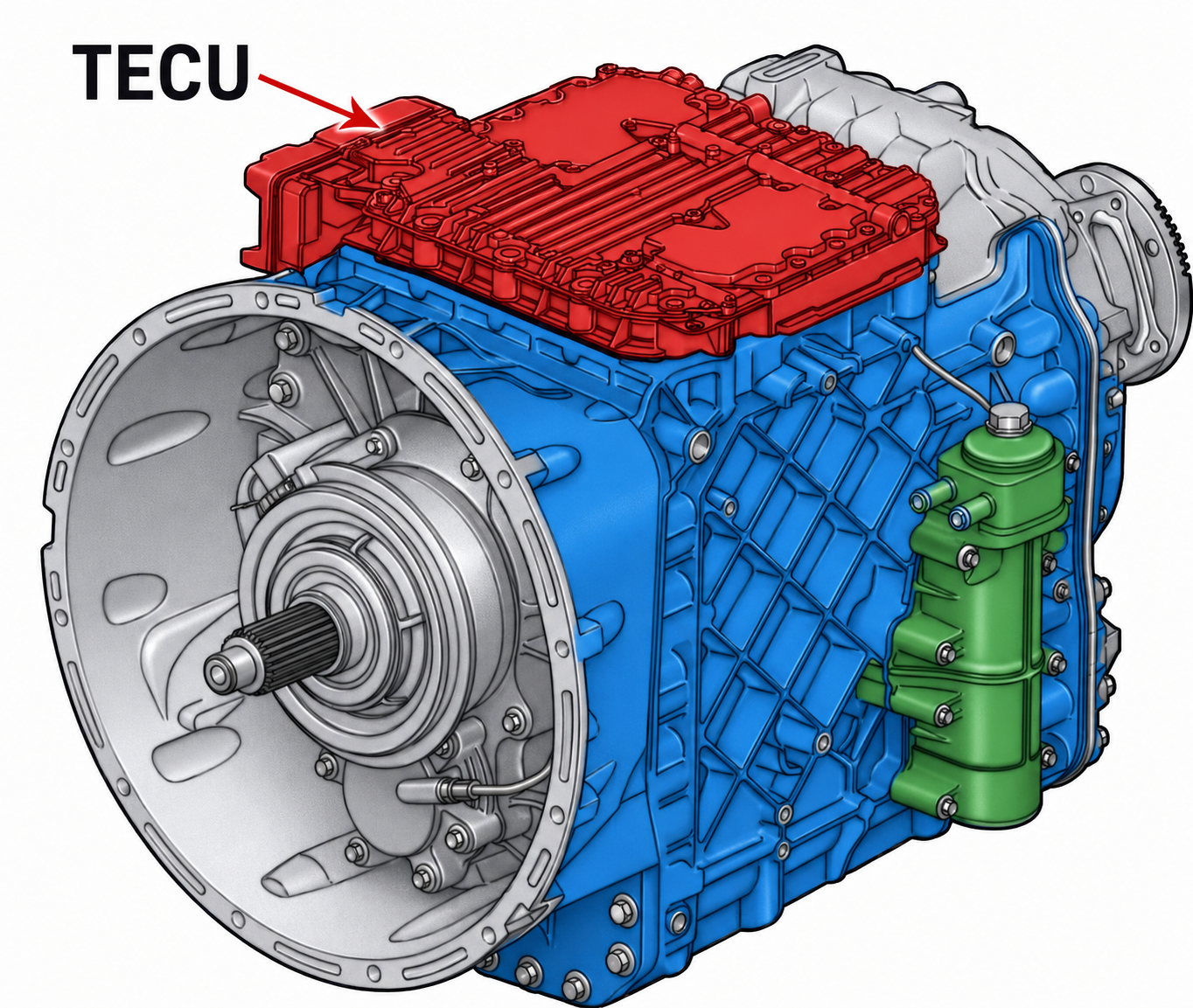
This fault code involves the Transmission Electronic Control Unit (TECU) and centers on the gearbox oil temperature sensor. It sets when the sensor’s signal moves outside its expected range, specifically indicating that transmission oil temperature has climbed above 100°C. Since transmission fluid plays a critical role in lubrication and cooling internal components, sustained high temperatures can accelerate wear and eventually lead to more serious mechanical damage if left unaddressed.
The main indicator drivers will see is a transmission oil temperature warning displayed on the dashboard, alerting them that the system has detected abnormally high heat levels within the gearbox.
Common Causes Behind the Code
Several different issues can lead to this fault, ranging from fluid problems to hardware and cooling system faults:
- Transmission fluid leakage reduced fluid levels can cause the transmission to run hotter than normal.
- Incorrect sensor parameter values — the oil temperature sensor (SETeGO) may have incorrect calibration data.
- Transmission oil cooler installed incorrectly — improper installation can reduce cooling efficiency.
- Damaged transmission oil cooler — physical damage prevents proper heat dissipation.
- Internal TECU failure — the control unit itself may be malfunctioning.
Understanding an Inactive DTC
This code is sometimes logged as inactive, which can make diagnosis more challenging since the fault condition isn’t currently present. A few points help decide whether it’s worth continuing to investigate:
- If it lines up with a customer complaint, it’s worth pursuing.
- Some codes only appear active while the related function is in use.
- The date and frequency of past occurrences can indicate how significant the issue really is.
If further investigation is warranted, recommended checks include reviewing the date and number of occurrences, confirming proper ground and power supply to the control unit, inspecting the connector for oxidation or damage, and running a wiggle test on the wiring harness to catch intermittent faults.
When the DTC Shows as “Healed”
If the system reports that the fault hasn’t reoccurred in a long time, it may be marked as self-healed. In this case, no action is needed based on that code alone — though it will remain stored in memory until manually cleared.
Step 1: Check the Transmission for Leaks
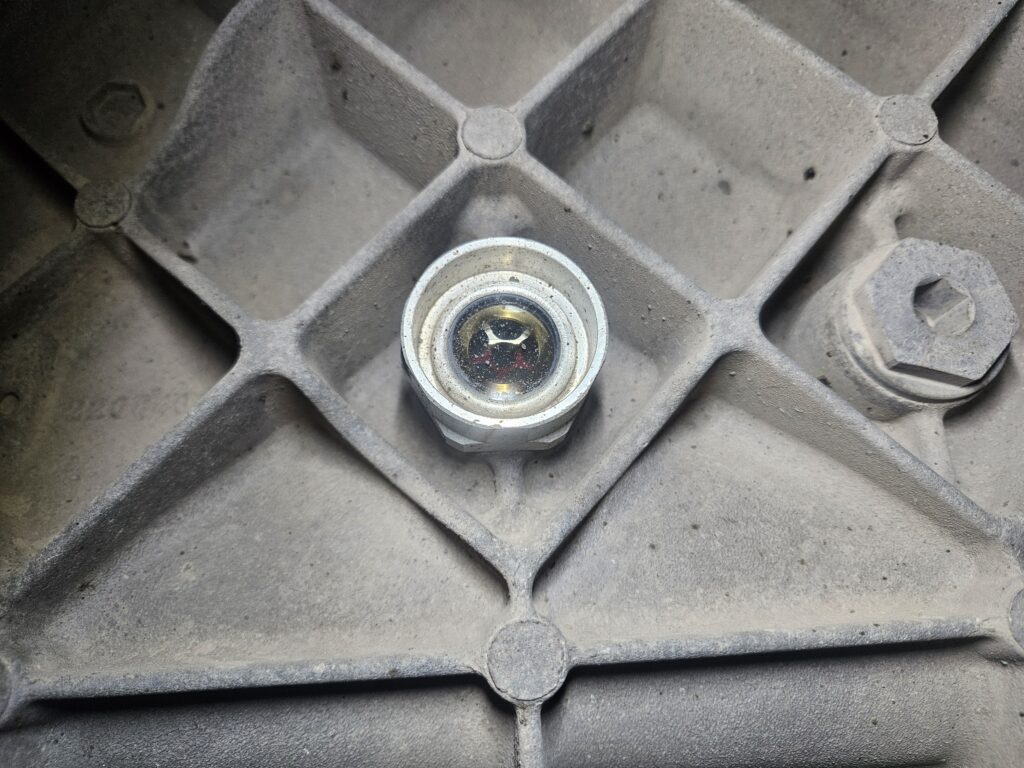
The first diagnostic step focuses on the transmission itself:
- Inspect for oil leakage around the transmission housing.
- Check for coolant leakage, which can indicate a cooler-related issue.
- Repair any leaks found.
- Top off fluid to the manufacturer’s recommended level.
Confirm the component is fully free of leakage before moving to the next step.
Step 2: Inspect the Oil Temperature Sensor (SETeGO)
Next, the oil temperature sensor itself is checked directly to confirm it’s reading accurately and functioning as expected, rather than sending a false high-temperature signal due to an internal fault.
➡️ Check Related Codes MID 140 PID 84 FMI 9 : Vehicle Speed Abnormal Update Rate
Step 3: Inspect the Transmission Oil Cooler
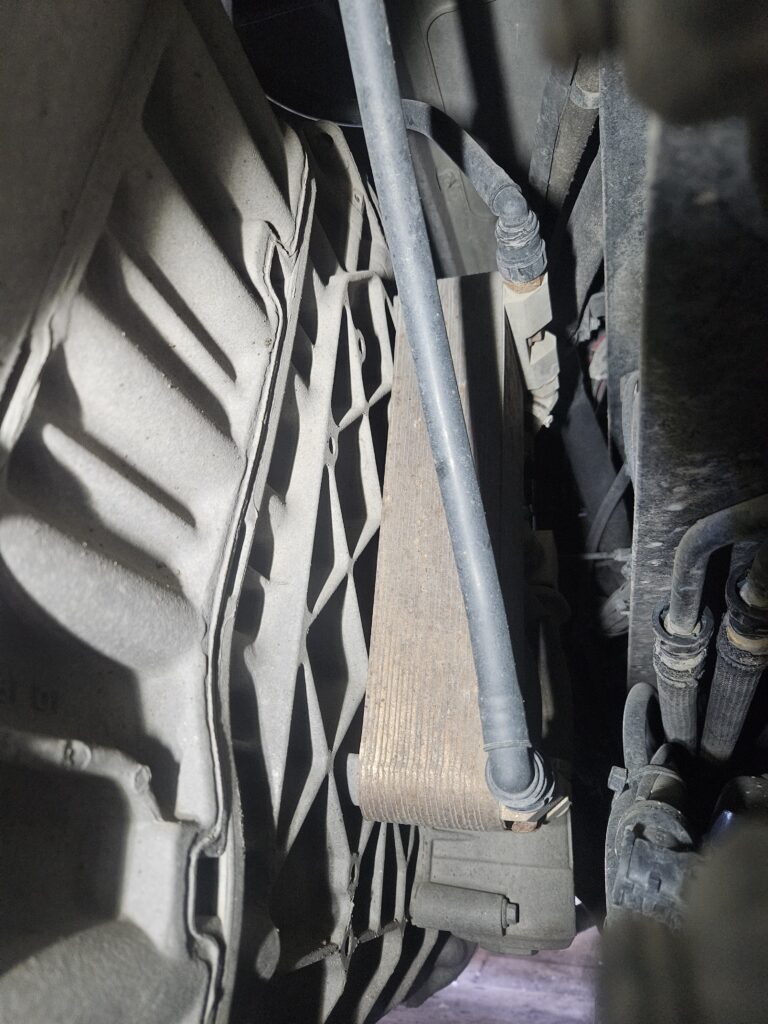
If the transmission and sensor check out, attention shifts to the oil cooler and its supporting components:
- Confirm any recently repaired, serviced, or replaced transmission or cooler parts are functioning correctly.
- Check whether any additional equipment or installations are blocking proper cooling airflow.
- Consider upgrading the transmission oil cooler if it’s undersized for the application.
- Inspect hoses and connections for coolant leakage.
- Look for cracks, cuts, or chafing on cooler lines.
- Check for blockages or restrictions preventing proper flow through the cooler.
- Recheck the transmission itself for any oil leakage.
Step 4: Inspect the TECU (A13B)
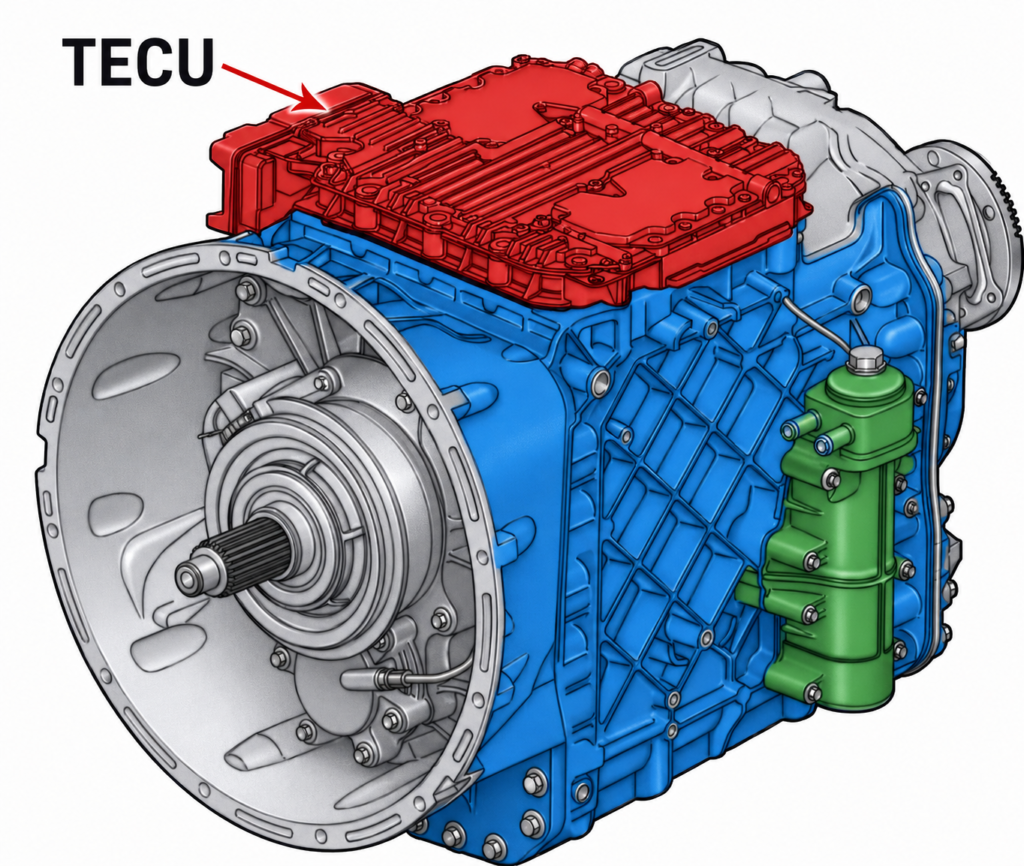
If every other area checks out fine, the final step focuses on the Transmission Electronic Control Unit itself:
- Visually inspect the component for physical damage.
- Ensure all other root-cause checks and suggested tests have already been completed.
- Check for relevant test operations tied to this function.
- Review other DTCs that might be related to this fault.
- Reconnect any disassembled connectors or components and perform a product status refresh.
- If the problem continues, clear all DTCs and perform a second refresh.
If none of these steps resolve the issue, the TECU itself likely needs to be replaced. Before replacing it, make sure every prior test and inspection step has genuinely been completed — replacing a control unit is a more involved repair and should be the last resort after ruling out simpler causes.
Verify Repairs
TECU P105922 signals that transmission oil temperature has exceeded safe limits, most commonly due to low fluid from a leak, a cooling system problem, or a sensor reading incorrectly. Working through fluid levels, the sensor, and the oil cooler before considering the TECU itself ensures the real cause gets fixed rather than replacing an expensive control unit unnecessarily.